Two Permissions for Asking Questions
When you notice that something seems off, even slightly, then ask 'why' and keep asking until you get to the right answers. Sounds simple but it is incredibly hard to do, and most people just let things slide instead of asking questions. Here is why:
Sometimes we are afraid of sounding stupid. What if my question isn’t well informed?
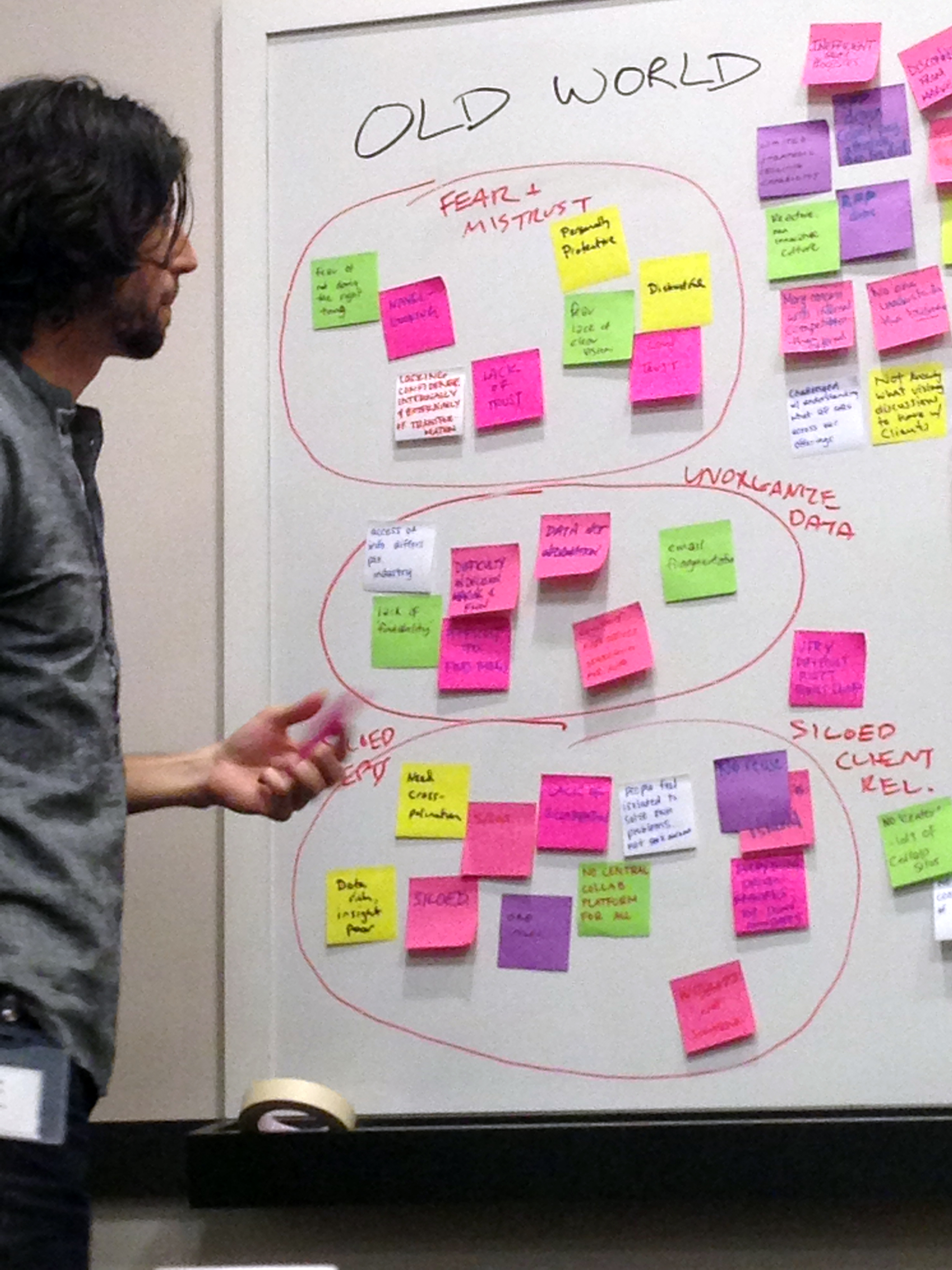
While I am in discovery sessions with clients I like to start the day saying, “I need to ask for permission to ask you stupid questions, because I won't know if my question is stupid until after I've asked it and we've explored it." Maybe the question is stupid. No problem, lets move on. Maybe it is the question that uncovers the biggest piece of gold in the entire session. I have no idea. And trust me, I ask plenty of stupid questions to get to a good one.
Sometimes we are afraid of people getting defensive. Will you get tired of my incessant questioning?
I also start discovery sessions asking the client for permission to ask a lot of tough questions. Here is how I phrase it, “I’m on your side but I’m going to be asking hard questions. It doesn’t mean I don’t like you, in fact, in means the opposite. Sorry in advance if I come across as a dick." Usually the client is glad they have someone aggressively questioning them and at the end of the day the feedback is usually that they wished I had questioned more.
When you notice that something seems off, even slightly, then ask 'why' and keep asking until you get to the right answers. Sounds simple but it is incredibly hard to do, and most people just let things slide instead of asking questions. Here is why:
Sometimes we are afraid of sounding stupid. What if my question isn’t well informed?
While I am in discovery sessions with clients I like to start the day saying, “I need to ask for permission to ask you stupid questions, because I won't know if my question is stupid until after I've asked it and we've explored it." Maybe the question is stupid. No problem, lets move on. Maybe it is the question that uncovers the biggest piece of gold in the entire session. I have no idea. And trust me, I ask plenty of stupid questions to get to a good one.
Sometimes we are afraid of people getting defensive. Will you get tired of my incessant questioning?
I also start discovery sessions asking the client for permission to ask a lot of tough questions. Here is how I phrase it, “I’m on your side but I’m going to be asking hard questions. It doesn’t mean I don’t like you, in fact, in means the opposite. Sorry in advance if I come across as a dick." Usually the client is glad they have someone aggressively questioning them and at the end of the day the feedback is usually that they wished I had questioned more.
Related blogposts
It is incredible how many things there are that I think I understand but as soon as I have to explain that thing to someone else I realize my thoughts are still fuzzy, I’ve made assumptions I can’t defend, and I can’t separate what information is important from what information is unnecessary.
When do I truly understand something?
The surest way to know if I understand something is to explain it to someone else. If I can get another person to understand it then I know I understand it too. This doesn’t mean that other person has to agree with me. In this exercise I am merely interested if I can get the person to understanding.
Why should I understand something this well? Isn't it enough if I understand it, even if I can't verbalize why? No. It isn't good enough. An idea has no power if it only lives in my head. An idea only becomes powerful when more than one person shares it with me.
By practicing your explanation you will refine your thoughts. You will learn what is important and what is not important. You will begin to understand that thing better yourself.
When you notice that something seems off, even slightly, then ask 'why' and keep asking until you get to the right answers. Sounds simple but it is incredibly hard to do, and most people just let things slide instead of asking questions. Here is why:
Sometimes we are afraid of sounding stupid. What if my question isn’t well informed?
While I am in discovery sessions with clients I like to start the day saying, “I need to ask for permission to ask you stupid questions, because I won't know if my question is stupid until after I've asked it and we've explored it." Maybe the question is stupid. No problem, lets move on. Maybe it is the question that uncovers the biggest piece of gold in the entire session. I have no idea. And trust me, I ask plenty of stupid questions to get to a good one.
Sometimes we are afraid of people getting defensive. Will you get tired of my incessant questioning?
I also start discovery sessions asking the client for permission to ask a lot of tough questions. Here is how I phrase it, “I’m on your side but I’m going to be asking hard questions. It doesn’t mean I don’t like you, in fact, in means the opposite. Sorry in advance if I come across as a dick." Usually the client is glad they have someone aggressively questioning them and at the end of the day the feedback is usually that they wished I had questioned more.
It is easy to forget we are hurtling through the universe on a ball of silicon and steel. Yet, if you can travel out far enough and see our ‘pale blue dot’ in the vastness of space, you’ll get a new perspective.
Every story - no matter the character, no matter the setting, no matter the conflict and no matter the resolution - is always wrestling with this one underlying question: what happens when desire encounters resistance?
Last month I walked away from my businesses, everything I had worked for in the past seven years, I sold it back. I’m done.
Your day-to-day language is drenched in metaphors that you aren't aware of. These hidden metaphors shape the way you think
I once read this tweet about how important networking is:
“If you fail to introduce yourself to someone it could cost you a million dollars”
That tweet terrified me because I'm an introvert.
Jonathan Collins resides in Portland, OR with his wife and two sons. He is a co-founder of Epipheo, Sincerely Truman and The Bible Project. He enjoys turning ideas into realities, writing, speaking and breakfast burritos.
Creating is hard
Being a creator has a lot of ups and downs. Some ideas become more than you had imagined. Other ideas die sudden deaths. Creating is hard but it is what we were designed to do.
You might also want to check out my essays.
RECENT POSTS
It is incredible how many things there are that I think I understand but as soon as I have to explain that thing to someone else I realize my thoughts are still fuzzy, I’ve made assumptions I can’t defend, and I can’t separate what information is important from what information is unnecessary.
When do I truly understand something?
The surest way to know if I understand something is to explain it to someone else. If I can get another person to understand it then I know I understand it too. This doesn’t mean that other person has to agree with me. In this exercise I am merely interested if I can get the person to understanding.
Why should I understand something this well? Isn't it enough if I understand it, even if I can't verbalize why? No. It isn't good enough. An idea has no power if it only lives in my head. An idea only becomes powerful when more than one person shares it with me.
By practicing your explanation you will refine your thoughts. You will learn what is important and what is not important. You will begin to understand that thing better yourself.
When you notice that something seems off, even slightly, then ask 'why' and keep asking until you get to the right answers. Sounds simple but it is incredibly hard to do, and most people just let things slide instead of asking questions. Here is why:
Sometimes we are afraid of sounding stupid. What if my question isn’t well informed?
While I am in discovery sessions with clients I like to start the day saying, “I need to ask for permission to ask you stupid questions, because I won't know if my question is stupid until after I've asked it and we've explored it." Maybe the question is stupid. No problem, lets move on. Maybe it is the question that uncovers the biggest piece of gold in the entire session. I have no idea. And trust me, I ask plenty of stupid questions to get to a good one.
Sometimes we are afraid of people getting defensive. Will you get tired of my incessant questioning?
I also start discovery sessions asking the client for permission to ask a lot of tough questions. Here is how I phrase it, “I’m on your side but I’m going to be asking hard questions. It doesn’t mean I don’t like you, in fact, in means the opposite. Sorry in advance if I come across as a dick." Usually the client is glad they have someone aggressively questioning them and at the end of the day the feedback is usually that they wished I had questioned more.